Re-opening or re-joining the fallopian tubes so that natural conception becomes possible again: after a family planning operation, or when the tubes are blocked near the uterus.
Your doctor will give you a realistic estimate of your chances after tests, and compare recanalisation with IVF honestly.
Blocked or cut: The tube is blocked, or was cut or clipped in a family planning operation.Reversal: The blocked or cut part is removed and the healthy ends are stitched back together.Cannulation: For a block near the uterus, a fine catheter or wire is passed to open the tube.Dye test: Dye is passed to confirm the tube is open.
The fallopian tubes carry the egg from the ovary to the uterus; this is where the sperm meets the egg. If the tubes are blocked or have been cut, pregnancy cannot happen naturally.
Fallopian tube recanalisation means re-opening or re-joining the tubes so that natural conception becomes possible again. It covers two different situations.
Women who had a family planning operation (tubectomy) and now want another child
The blocked or cut segment is removed and the healthy ends are stitched back together
Usually 1–2 days
Women whose tubes are blocked near the uterus by mucus, debris or mild scarring
A fine catheter is passed through the tube to open it, usually with hysteroscopy and laparoscopy
Often day-care
Tubes may be closed on purpose by a family planning operation. They may also get blocked by:
Including some sexually transmitted infections.
Can cause scarring around the tubes.
Abdominal or pelvic surgery that caused scarring.
Can damage the tube.
Still seen in India.
Near the uterus.
Blocked tubes usually cause no pain or symptoms. Many women learn about them only during fertility tests.
In India, tubectomy is often done by laparoscopy with rings or clips, or by a small cut using the Pomeroy method. The method used affects how much healthy tube is left. This is why your old operation notes are so helpful.
| Sterilisation method | Effect on the tube | Suitability for reversal |
|---|---|---|
| Rings (e.g. Falope ring) or clips | Damage to a short part of the tube | Often more suitable |
| Pomeroy (tied and cut) | A small part of the tube removed | Often suitable |
| Burning (cautery) | Longer part of the tube damaged | Often less suitable |
| Tube fully removed (salpingectomy) | No tube left | Not possible; IVF is the option |

Review of the previous sterilisation notes, if available.
To see where the tubes are blocked. An HSG is a short X-ray test: dye passes through the cervix to show whether it flows freely through the tubes, usually a few days after your period ends.
To check egg reserve.
For your partner.
Sometimes done together with the repair.
Performed under general anaesthesia
Laparoscopic or mini-laparotomy tubal reversal: the tubes are re-joined with very fine stitches
Usually 1–2 days in hospital
Performed under general anaesthesia
Hysteroscopic-laparoscopic cannulation: a fine wire or catheter clears the blockage
Dye is passed to confirm the tube is open
Often day-care
Walking the same day or next day
Mild belly or shoulder discomfort for a few days
Desk work in about 1–2 weeks after laparoscopy; a little longer after mini-laparotomy
Avoid heavy lifting for a few weeks, as advised
A follow-up visit to check healing and plan the next steps
Neither option suits everyone. Women in their late 30s or with low egg reserve may be advised to consider IVF, as time matters more.
| Feature | Tubal reversal | IVF |
|---|---|---|
| Surgery | Yes, under general anaesthesia | No major surgery; egg collection under sedation |
| How you try | Naturally, every month | One treatment cycle at a time |
| More children later | Possible without further treatment | Each pregnancy needs a new cycle or frozen embryo |
| Depends on | Tube length, age, egg reserve | Age, egg reserve, embryo quality |
| Ectopic risk | Higher than usual | Still possible |
| Contraception after | Needed again if no more children wanted | Not affected |
The chance of pregnancy depends on your age, egg reserve, the type of sterilisation done and the length of healthy tube left. Your doctor will give you a realistic estimate after tests.
After tubal surgery, there is a higher risk of ectopic pregnancy (pregnancy in the tube). Seek urgent care if you have a late period with any of these:
Please see your doctor early once your period is late, so the pregnancy location can be confirmed by ultrasound. An ectopic pregnancy can be serious; early diagnosis allows safer treatment. Other risks include bleeding, infection and the tubes blocking again.
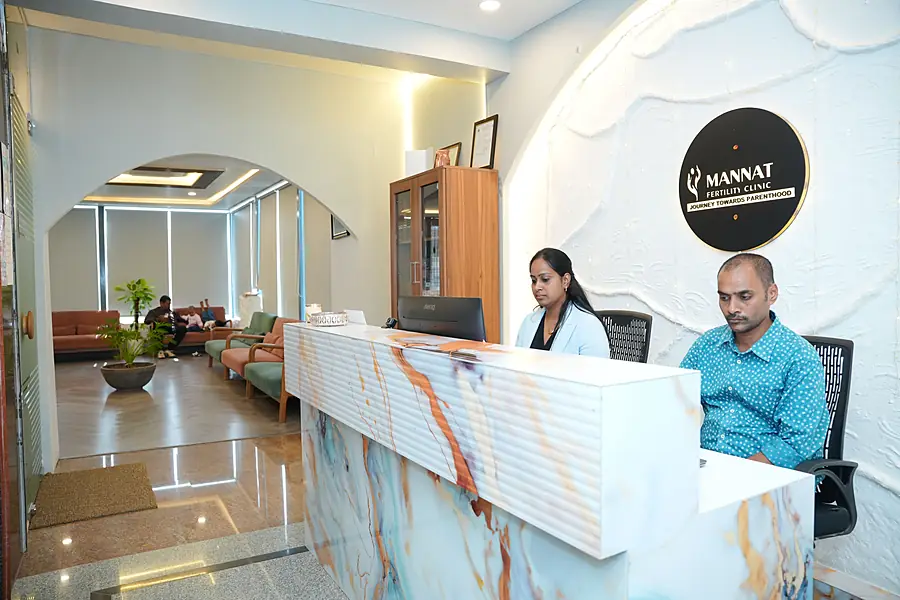
Couples visit our clinic near Kundalahalli Signal to discuss tubal recanalisation and other options.
The cost depends on the type of procedure, the tests needed, the hospital and the length of stay. Please call us for an estimate.
Detailed fertility assessment before recommending surgery
Honest advice on whether recanalisation or IVF suits you better
Laparoscopic and hysteroscopic procedures. Meet our doctors →
Consultations in Whitefield; surgery at our partner hospital
About tubal recanalisation and reversal.
Bring your previous reports and discuss tubal recanalisation with our team. Open all 7 days, 8:00 AM – 8:00 PM.