
EXCISION
Excision
Cutting out endometriosis patches.
A keyhole operation to find and remove endometriosis tissue from inside the pelvis. It can confirm endometriosis and treat it in the same procedure, with a fertility-preserving approach.
Suitability for surgery and outcomes vary from person to person. Your surgeon will explain the benefits and risks before you decide.
Excision: Cutting out endometriosis patches.Ablation: Destroying small surface patches with energy.Cystectomy: Removing a chocolate cyst while keeping healthy ovarian tissue.Adhesiolysis: Releasing scar tissue that sticks organs together.Tube test: Checking with dye whether the fallopian tubes are open.
Laparoscopic endometriosis surgery is a keyhole operation to find and remove endometriosis tissue from inside the pelvis. A thin camera (laparoscope) and fine instruments are passed through 3–4 small cuts of 5–10 mm on the abdomen.
The surgeon can see the pelvis in high detail on a screen and treat the disease precisely.
Laparoscopy is the most accurate way to confirm endometriosis and can treat it in the same procedure.
New to endometriosis? Read about symptoms, diagnosis and medicines on our Endometriosis Management page.
In endometriosis, tissue like the womb lining grows outside the womb. It reacts to monthly hormones, causing pain, swelling and scar tissue.
Common symptoms include painful periods, pain during sex, pain while passing stools during periods, and difficulty in conceiving.
Endometriosis is often grouped into stages I to IV, based on how much disease is seen at surgery.
The stage does not always match the level of pain. A woman with a few small patches may have severe pain, while another with extensive disease may have few symptoms.
Surgery may be advised if you have:

Control pain and slow the disease
No
No: most stop ovulation while taken
No downtime
Often needed for years
Remove visible disease and scar tissue
Yes, with a tissue sample
May help in selected women
About 2–4 weeks
Often combined with medicines after
Many women do well with medicines alone. Your doctor will help you weigh both options based on your symptoms, scan findings and pregnancy plans.
The exact steps depend on what the surgeon finds. Swipe through the main techniques.
Cutting out endometriosis patches.
Destroying small surface patches with energy.
Removing chocolate cysts while preserving healthy ovarian tissue.
Releasing scar tissue that sticks organs together.
Chromopertubation: checking if the fallopian tubes are open, for women planning pregnancy.
Complex deep endometriosis may need a team approach with other specialists.
Compared with open surgery. Every woman’s recovery is different.
A consultation with your surgeon
Ultrasound or MRI
Blood tests and an anaesthesia check
AMH may be tested to assess ovarian reserve
Surgery is done under general anaesthesia
It usually takes 1–3 hours, depending on how extensive the disease is
Most women walk the same day and go home within 1–2 days
Light activity resumes in about a week; full recovery usually takes 2–4 weeks
Your doctor may advise hormonal treatment after surgery to lower the chance of recurrence
Use this as a simple checklist. Tick items as you complete them.
Most desk-based professionals need about 1–2 weeks off. Work from home for the first week if you can.
Example: 10 days off. Your surgeon will advise based on your surgery.
Recovery is different for everyone. This is a general guide only.
Walking around; mild tummy and shoulder-tip pain from the gas used.
Home rest; light walks; pain settles with medicines.
Return to desk or work-from-home for most women.
Gradual return to exercise, driving and household work.
Follow-up visit; review of biopsy report and long-term plan.
Recovery may take longer after extensive or deep endometriosis surgery.
Keep the small wounds clean and dry, as advised.
Every few hours, to aid healing and reduce clot risk.
With fibre and plenty of fluids to avoid constipation.
Such as water cans or children, for about 2–4 weeks.
Long commutes on Bengaluru roads can be tiring. Work from home for the first week if you can.
Contact us or go to the nearest emergency department if you have:
Like any surgery, there are some risks, such as bleeding, infection, injury to nearby organs (bowel, bladder, ureter) and reactions to anaesthesia. Endometriosis may also come back. Your surgeon will explain these in detail before you give consent.
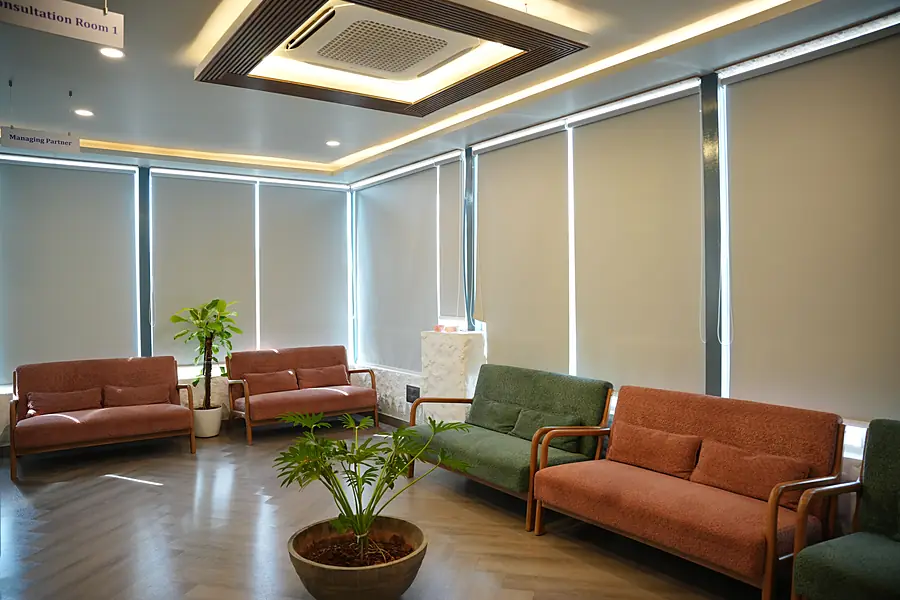
Your surgery is planned here, step by step, with time for your questions.
The cost of endometriosis surgery depends on the extent of disease, the procedures needed, the hospital room type and the length of stay. Most health insurance policies cover medically needed laparoscopy.
Gynaecologist and laparoscopic surgeon. Meet our doctors →
Fertility-preserving surgical approach
Complete care: diagnosis, surgery, hormonal treatment and follow-up
Surgery at our partner hospital; consultations near Kundalahalli Signal, Whitefield
About laparoscopic endometriosis surgery.
Discuss your options with our Whitefield team. We are close to ITPL, Marathahalli, Mahadevapura, Hoodi and Varthur. Open all 7 days, 8:00 AM – 8:00 PM.